










EBOOK IN LINGUA STRANIERA


The Sound Of Falling Light: Exploring the Strange Overlap Between Acoustics and Photon Behavior

8,99 €
+90
punti 
Venditore: Feltrinelli

Acquista online
Scaricabile subito
Articolo acquistabile con Carta del Docente

Articolo acquistabile con Carta Cultura Giovani e Carta del Merito

Articolo acquistabile con Carta della Cultura

Abbonati a Kobo plus per avere accesso illimitato a questo contenuto

Dati e Statistiche
 Salvato in 0 liste dei desideri
Salvato in 0 liste dei desideri
The Sound Of Falling Light: Exploring the Strange Overlap Between Acoustics and Photon Behavior
Scaricabile subito
8,99 €
8,99 €
Scaricabile subito
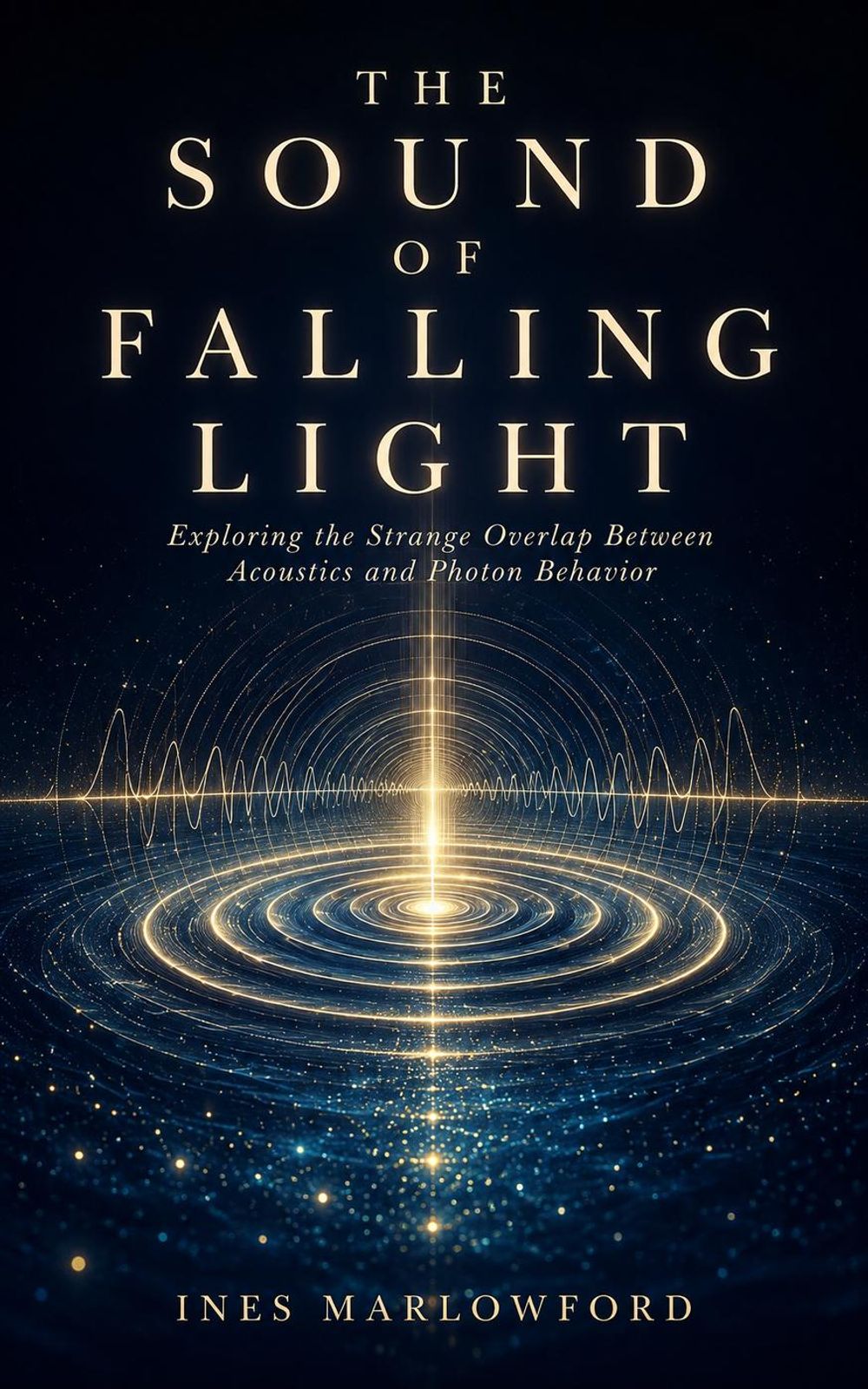


A bat hunting in total darkness. A doctor reading an ultrasound screen. A physicist listening to the recorded sound of two black holes colliding a billion years ago. What do they have in common? More than you think. For over two centuries, sound and light have been quietly having a conversation that almost no one noticed, and The Sound of Falling Light finally tells the story of what they have been saying to each other. It begins with a violin bow, a brass plate, and a scattering of sand that arranged itself into patterns so strange they stopped Napoleon in his tracks. It moves through a Victorian lecture hall where a candle flame flinched at the sound of a hiss, a Washington rooftop where Alexander Graham Bell sent the human voice riding on a beam of sunlight, and a Paris laboratory where two brothers glued together tinfoil and quartz and accidentally invented the technology inside every sonar system, medical ultrasound machine, and quartz watch made since. Then it gets stranger. In 1934, two German researchers trying to develop photographs faster noticed their equipment glowing in the dark, and stumbled onto a phenomenon so extreme that a single collapsing bubble of gas, smaller than a grain of sand, briefly reaches conditions once thought to exist only inside stars. Ninety years later, physicists still cannot fully agree on why. A snapping shrimp in shallow tropical water turns out to be doing the exact same physics with its claw. And in 2015, a team of scientists heard, for the first time in human history, the actual sound of two black holes merging a billion light years away, a ripple in the fabric of space and time itself, converted into a chirp anyone could recognize. This is narrative science at its most genuinely surprising: real scientists, real laboratories, real discoveries, told with the pace and curiosity of the best stories rather than the caution of a textbook. You will meet the graduate student who trapped a single bubble of light in a Mississippi laboratory. The physicist who cooled a mechanical device to the edge of quantum stillness. The mathematician who had to submit her prize winning work under a man's name because the French Academy would not read it otherwise. And you will come away understanding something that took physics two hundred years to fully see: that sound and light were never really strangers. Written for readers who loved Bill Bryson's curiosity, Mary Roach's wit, and Carlo Rovelli's sense of wonder, but built entirely from verified history and real physics, The Sound of Falling Light is the rare popular science book you will want to finish in a single sitting, and the rare one that will still be true tomorrow. If you have ever wondered what a shrimp, a telescope, a pregnancy scan, and a gravitational wave detector could possibly have in common, this book has your answer, and it is more astonishing than fiction.
-
Autore:
-
Anno edizione:2026
-
Editore:
-
Formato:
-
Lingua:Inglese
Compatibilità:
Tutti i dispositivi (eccetto Kindle) Scopri di più
Layout:
Reflowable
EAN:
9798235645929

Formato:
Gli eBook venduti da Feltrinelli.it sono in formato ePub e possono essere protetti da Adobe DRM. In caso di download di un file protetto da DRM si otterrà un file in formato .acs, (Adobe Content Server Message), che dovrà essere aperto tramite Adobe Digital Editions e autorizzato tramite un account Adobe, prima di poter essere letto su pc o trasferito su dispositivi compatibili.
Cloud:
Gli eBook venduti da Feltrinelli.it sono sincronizzati automaticamente su tutti i client di lettura Kobo successivamente all’acquisto. Grazie al Cloud Kobo i progressi di lettura, le note, le evidenziazioni vengono salvati e sincronizzati automaticamente su tutti i dispositivi e le APP di lettura Kobo utilizzati per la lettura.
Clicca qui per sapere come scaricare gli ebook utilizzando un pc con sistema operativo Windows
